Our research is diverse and interdisciplinary, utilizing a range of tools and datasets to answer questions of relevance to scientists and society. Here are a few topics that we are actively investigating:
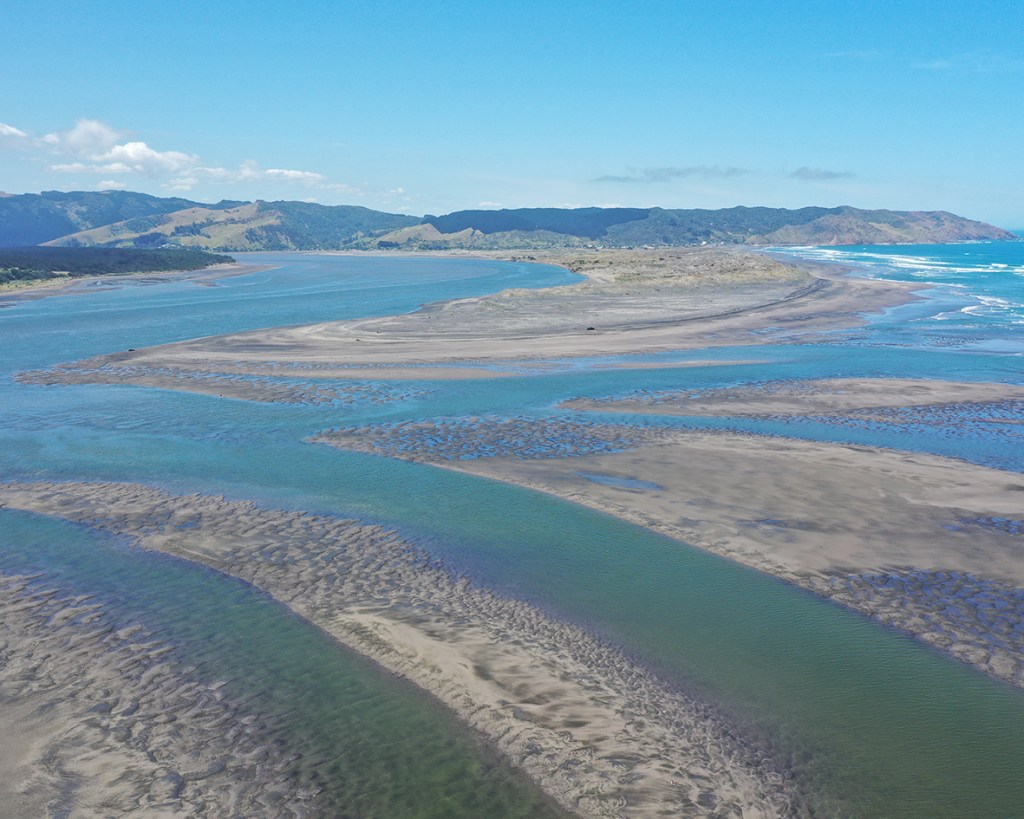
Modern Sedimentary Environments
Modern nearshore and shallow marine depositional systems provide an opportunity to link active sedimentary processes to their deposits. These details can be used to better understand the sedimentary record of Earth’s past surface processes and environments. Our research has taken us to the coast of BC (Canada), Queensland (Australia), and the estuaries and deltas of New Zealand’s North Island.

Carbon Geostorage
Carbon capture and storage (CCS) has the potential to significantly abate climate change. Storage in geological formations is one of the primary mechanisms used for CCS, but requires detailed reservoir modelling to accurately predict the long term fate of injected carbon dioxide. Our research has focused on CCS projects in BC and Alberta (Canada), Queensland (Australia), and New Zealand.

Porosity and Permeability in Bioturbated Sediments
The burrowing activity of invertebrates affects the sorting characteristics of sediments and, as a result, strongly impacts porosity and permeability. These biogenic changes to the sediment texture have important implications to fluid flow in subsurface strata (i.e., water, oil, natural gas). Our investigations have included the Cretaceous Viking and Niobrara formations in the Western Canada Sedimentary Basin, as well as the Hanifa Formation (Saudi Arabia).

Basin Analysis and Modelling
3D geological models of sedimentary basins can be used for a variety of purposes including for extracting fluids (e.g., water, oil, natural gas), injecting fluids (e.g., carbon dioxide or waste water), or for predicting the behavior of seismic waves generated from earthquakes. Some examples of areas which have been modelled by our group include the Surat Basin (Australia), Taranaki Basin (New Zealand), and Hamilton Basin (New Zealand).
 Sedimentary Environments and Analogues Research Group